


Electrical Grounding and Bonding in Youngstown, Ohio Homes
- Joshua Mook
- Dec 30, 2025
- 3 min read
What Homeowners and Buyers Need to Know
Electrical grounding and bonding are critical safety components in every home, yet they are among the most commonly misunderstood systems we evaluate during a home inspection. At Mook Home Inspections LLC, we frequently identify grounding and bonding defects in homes throughout Youngstown, Ohio, as well as Boardman, Austintown, Canfield, Poland, and surrounding Mahoning Valley communities.
This article explains what grounding and bonding are, why they matter, how they should be installed, common defects found during home inspections, and how these items are evaluated under the InterNACHI Standards of Practice.
What Is Electrical Grounding?
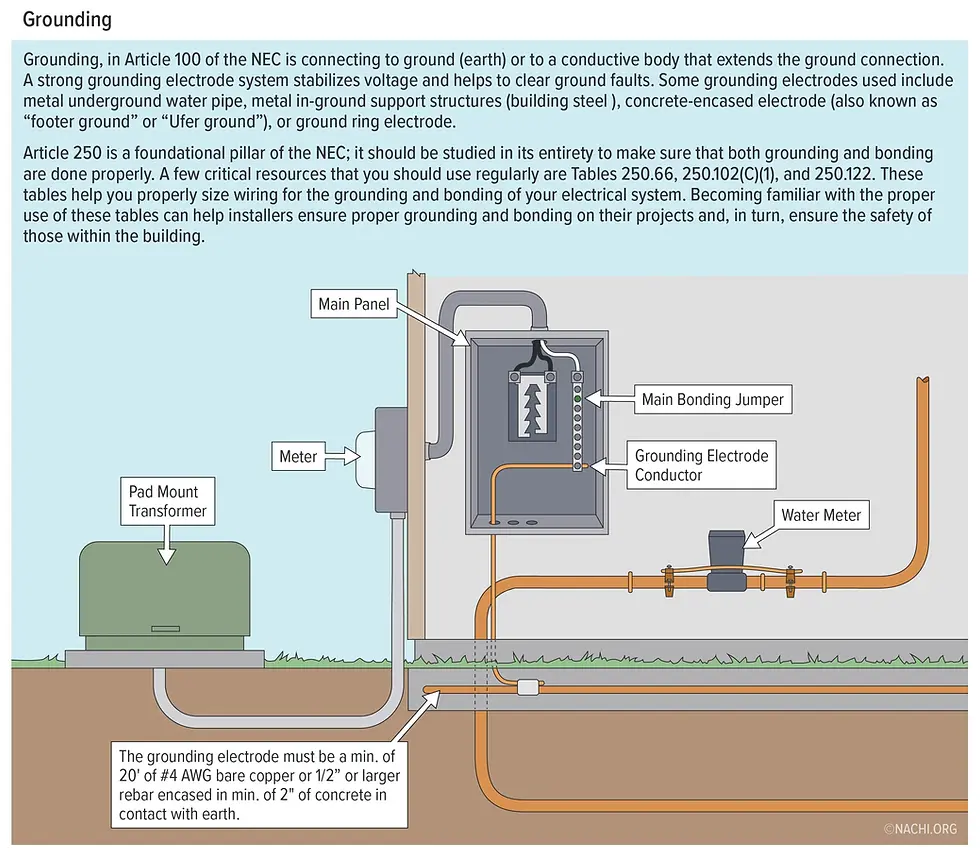
Electrical grounding is the intentional connection of the home’s electrical system to the earth. This is accomplished through a grounding electrode system, which may include:
Ground rods driven into the soil
Concrete-encased electrodes (ufer grounds)
Metal underground water piping (when present and compliant)
Purpose of Electrical Grounding
Proper grounding helps to:
Safely dissipate lightning strikes and utility surges
Stabilize voltage within the electrical system
Reduce the risk of fire and equipment damage
Grounding typically does not carry current during normal operation. It functions during abnormal or fault conditions.
What Is Electrical Bonding?

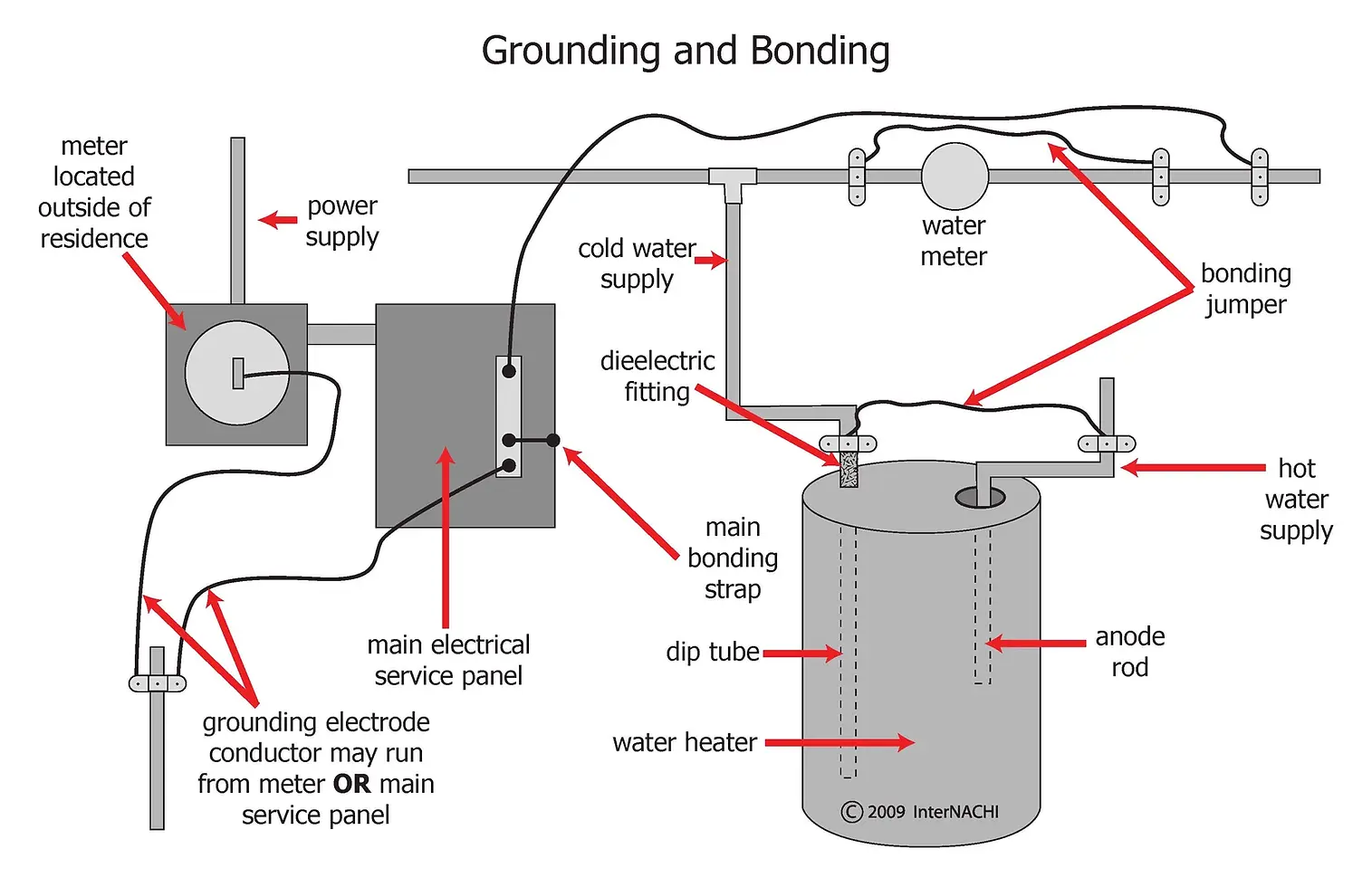
Electrical bonding connects all non–current-carrying metal components together so they remain at the same electrical potential.
Bonded components may include:
Electrical panels and enclosures
Metal conduit
Metal water piping systems
Gas piping systems
Appliance frames
Purpose of Electrical Bonding
Bonding:
Prevents metal components from becoming energized
Creates a low-resistance fault path
Allows circuit breakers to trip quickly during a fault
Reduces the risk of electrical shock and fire
A simple way to remember the difference:
Grounding connects the system to earth
Bonding connects metal components together
Why Grounding and Bonding Are Important in Youngstown-Area Homes
Many homes in Youngstown and the Mahoning Valley were built decades ago—often before modern grounding and bonding requirements existed. Older homes may have:
Two-wire electrical systems
Incomplete grounding electrode systems
Improper bonding of metal piping
Electrical upgrades performed incorrectly over time
Without proper grounding and bonding, homeowners may face:
Increased shock hazards
Breakers that fail to trip during a fault
Energized plumbing or appliances
Higher risk of electrical fires
Damage to electronics and HVAC equipment
Proper Grounding: What Inspectors Look For
While home inspectors do not design or install electrical systems, the InterNACHI Standards of Practice require inspectors to evaluate visible grounding components.
A properly installed grounding system typically includes:
An approved grounding electrode system
Correctly sized grounding electrode conductors
Secure, listed clamps and connections
All grounding electrodes bonded together
Connection to the service equipment grounding bar
Proper Bonding: What Inspectors Look For
Correct bonding includes:
Neutral-to-ground bonding only at the main service disconnect
Separation of neutrals and grounds in subpanels
Bonding of metal water piping (when present)
Bonding of gas piping systems using approved methods
Electrical continuity between metal enclosures and raceways
Improper bonding is one of the most common electrical defects found during home inspections in the Youngstown area.
Common Grounding and Bonding Defects Found During Home Inspections
At Mook Home Inspections LLC, we routinely identify the following issues during electrical inspections:
Missing or improperly installed ground rods
Disconnected or damaged grounding electrode conductors
Neutral and ground wires improperly bonded in subpanels
Loose or double-lugged grounding conductors
Improper or unlisted grounding clamps
Missing bonding jumpers at water meters
Gas piping systems not bonded
Corroded or deteriorated grounding connections
These defects can compromise safety and should be evaluated by a licensed electrician when identified.
InterNACHI Standards of Practice and Electrical Inspections
According to the InterNACHI Residential Standards of Practice, a home inspection includes:
Inspecting the service equipment, grounding system, and bonding
Reporting visible deficiencies that may affect safety
Identifying improper neutral-to-ground bonding
Describing material defects using plain language
Home inspections are visual, non-invasive evaluations, and inspectors do not determine code compliance or predict remaining service life. However, safety-related defects are always documented and explained.
Why Electrical Grounding and Bonding Matter When Buying or Selling a Home
Whether you are:
Buying a home in Youngstown, OH
Selling a property in Mahoning County
Maintaining an older home in the Mahoning Valley
A professional home inspection can help identify grounding and bonding concerns before they become costly or dangerous problems.
Schedule a Home Inspection in Youngstown, Ohio
If you are looking for a thorough, professional home inspection, Mook Home Inspections LLC proudly serves Youngstown, Boardman, Austintown, Canfield, Poland, and surrounding areas.
Electrical safety matters. Let a qualified home inspector help you understand the condition of your home’s electrical system and protect your investment.
Comments